Two mountains, two stories
Himalayan pink salt and Carpathian rock salt are often shelved side by side in gourmet shops. Both arrive as solid mineral blocks. Both invite you to grate at the table. The resemblance stops there.
Origin. Carpathian Salt sources licensed deep-strata halite at Salina Târgu Ocna, Romania — part of the Eastern Carpathian salt dome we describe on The Salt. Himalayan blocks sold worldwide typically trace to ancient deposits in the Salt Range of Pakistan, most famously the Khewra mine — a different geology, a different supply chain.
Age. Our Carpathian rock salt formed in Miocene lagoon conditions roughly twenty million years ago — the figure we state on our transparency page. Himalayan deposits are also geologically ancient; published ages and formation stories vary by source and seam.
Colour. Himalayan halite is known for pale pink to rose tones from trace minerals. Carpathian halite from Târgu Ocna presents white and soft grey banding — sometimes called aurul alb locally. The pink tones and the white-grey banding each reflect their geology — neither tells you how to grate at the table.
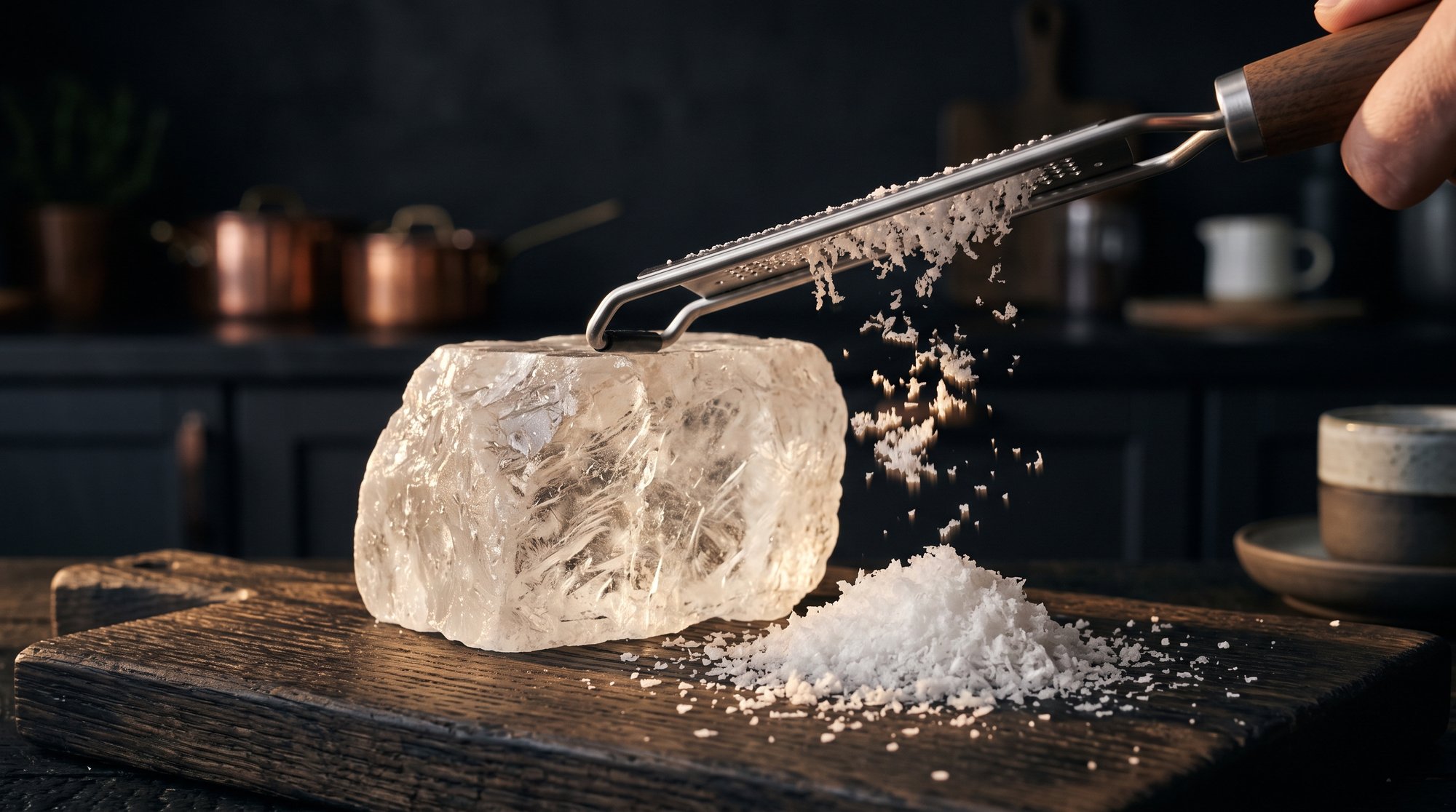
How it is used. Both products belong at the table with a grater — fresh crystals at the moment you eat. Carpathian Salt is grate-only rock, grater, and wooden box. If you already grate Himalayan rock at home, the gesture is the same.
Try the Carpathian set
Batch 001 — Founder's Edition is our first release: one Carpathian block, grater, and handcrafted wood box at £48. For engraving or corporate gifting, start at The Box.
Batch 001
Carpathian rock salt for grating
Natural wood gift set with unprocessed rock salt and grater — tableside ritual, not a cooking slab.